Notification Sync Patterns Guiding Real-Time Incentive Timing Across Portable League Wagering Interfaces
Sofia Meier · Jun 20, 2026
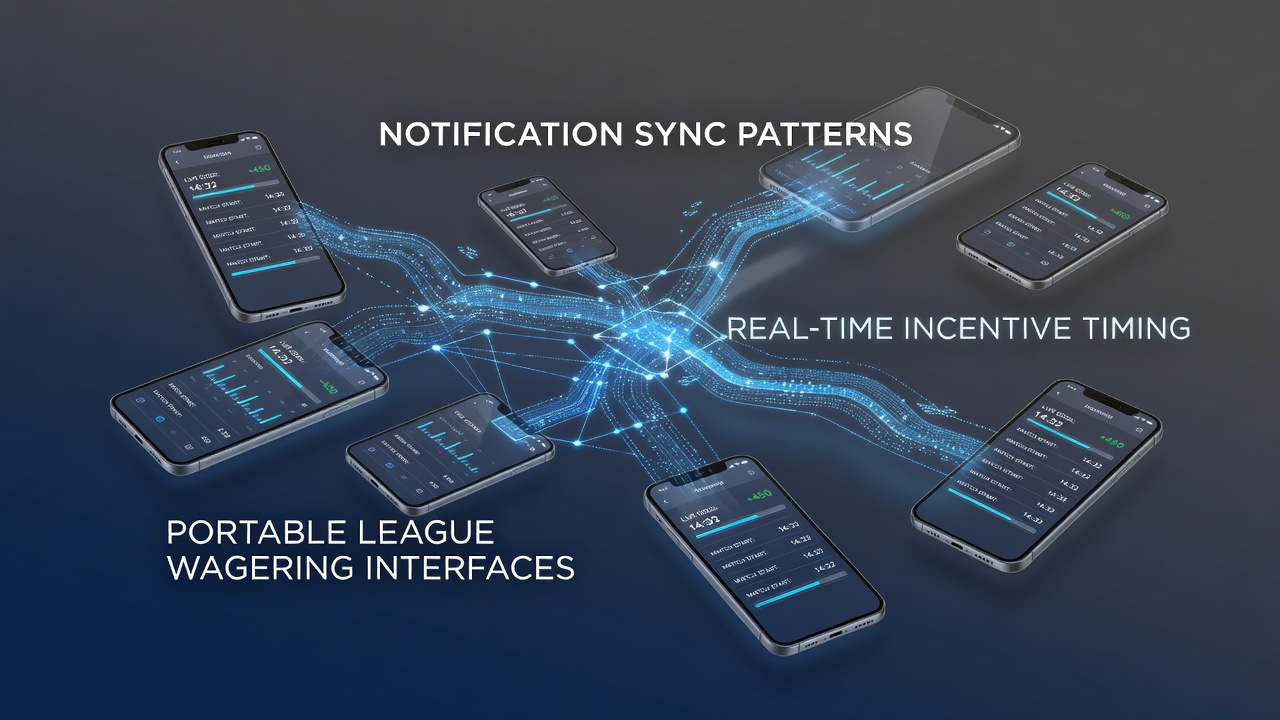
Notification Sync Patterns Guiding Real-Time Incentive Timing Across Portable League Wagering Interfaces
Portable league wagering interfaces rely on coordinated notification systems that align timing mechanisms with live event developments and user engagement windows. These patterns operate through layered protocols where push alerts, in-app banners, and background signals coordinate to surface incentives at moments when probability shifts create optimal activation opportunities. Data from industry monitoring in early 2026 shows these synchronized flows now handle millions of daily triggers across major basketball and football platforms.
Core Mechanisms of Notification Alignment
Developers build notification sync patterns around event-driven triggers that pull from live data feeds and user session histories. A single league match might generate dozens of micro-events such as scoring plays or injury updates, and each one feeds into algorithms that calculate incentive windows measured in seconds rather than minutes. Observers note that successful implementations reduce latency between event detection and alert delivery to under three seconds, which maintains relevance while complying with regional data handling standards.
Systems often segment users into cohorts based on previous interaction velocity, allowing the same underlying match to trigger different incentive types for different participants. One cohort might receive deposit-match offers during a timeout, while another sees odds-boost notifications tied to the next possession. This segmentation depends on continuous synchronization between the notification queue and the central odds engine.
Real-Time Incentive Delivery in Practice
Across handheld devices, timing precision determines whether an incentive converts. Research conducted by mobile analytics firms indicates that alerts arriving within a four-second window after a significant line movement achieve conversion rates up to 27 percent higher than those delayed by eight seconds or more. Engineers achieve this precision by maintaining redundant sync channels that fall back to alternative delivery paths when primary networks experience congestion.
Portable interfaces must also manage device-level variables such as operating system notification throttling and battery-saving modes. Protocols now include adaptive throttling that pauses non-critical sync cycles during low-activity periods and resumes full cadence when live match intensity increases. This approach preserves system resources while ensuring incentives reach users at the intended moments.
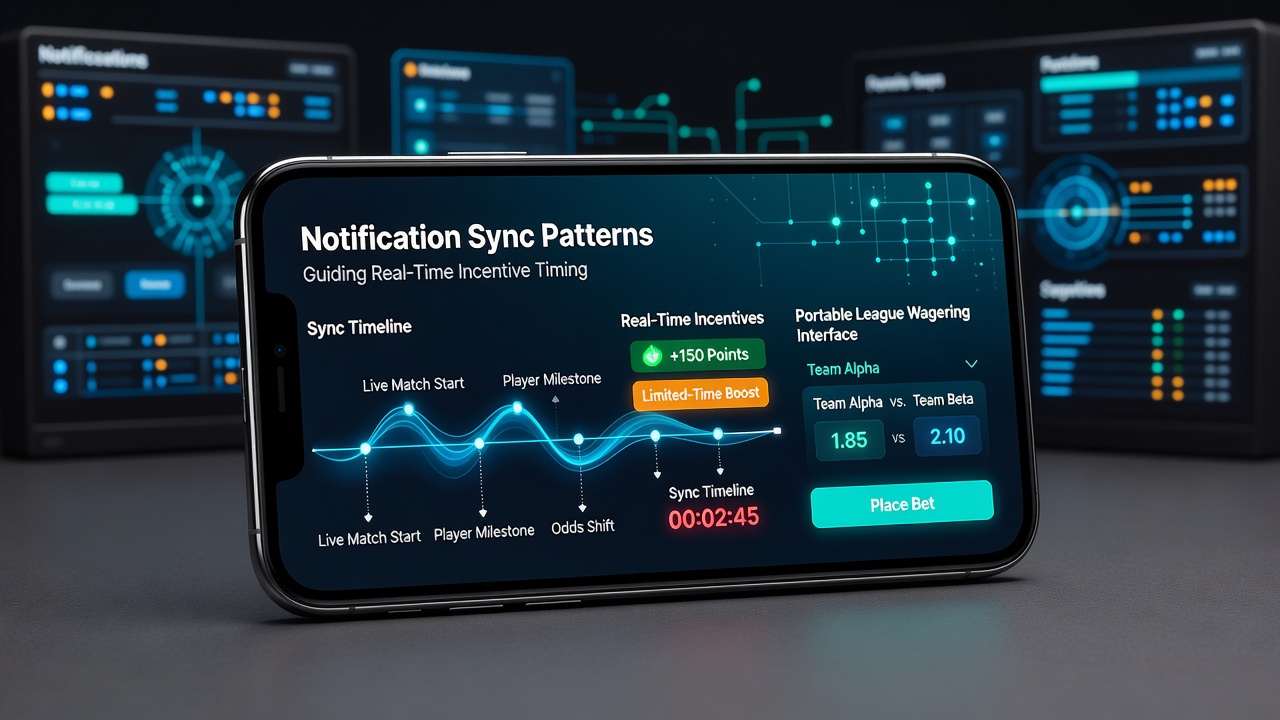
Integration with Broader Platform Architecture
Notification sync patterns sit inside larger application frameworks that connect odds calculation, user account states, and payment processing. When a line adjustment occurs, the system evaluates active user sessions, checks eligibility rules for current promotions, and then queues the appropriate notification payload. The entire sequence runs through distributed servers positioned near major population centers to minimize transmission delays.
According to reports from the Australian Communications and Media Authority, regulatory expectations around transparent incentive delivery have encouraged platforms to publish timing standards that users can review. These standards describe average delivery windows and fallback procedures when network conditions affect synchronization.
June 2026 brought additional emphasis on cross-device continuity, with many operators extending sync patterns to watches and tablets so that an incentive initiated on a phone remains available when the user switches devices mid-match. This continuity requires persistent session tokens and state replication across multiple endpoints without exposing sensitive account details.
Challenges in Maintaining Synchronization Accuracy
Network variability remains a persistent constraint. Even with optimized routing, packet loss during peak evening hours can disrupt the intended sequence of alerts. Teams address this through message queuing systems that hold and reorder notifications until delivery confirmation arrives, preventing users from receiving stale incentives after the relevant match segment has concluded.
Security considerations also shape these patterns. Encrypted channels protect the content of timed incentives, yet the encryption overhead must not introduce measurable delays. Developers therefore employ lightweight protocols that balance protection with speed, often rotating encryption keys at intervals that align with match durations rather than fixed calendar periods.
Future Directions for Sync Pattern Refinement
Emerging approaches incorporate predictive elements that anticipate line movements based on historical patterns within similar scorelines or time remaining. When models flag a high-probability shift, the system pre-positions incentive payloads on edge servers so that final confirmation triggers near-instant delivery. Early deployments of these predictive layers, documented in proceedings from the University of Nevada, Las Vegas International Gaming Institute, show reduced average latency compared with purely reactive systems.
Continued refinement will likely focus on multi-league coordination, where notifications for concurrent basketball and football events maintain independent sync threads without cross-contamination. The underlying architecture already supports parallel queues, and operators continue to test load-balancing rules that allocate bandwidth according to real-time viewership data rather than static schedules.
Conclusion
Notification sync patterns form the operational backbone that allows portable league wagering interfaces to deliver incentives in alignment with live developments. Through coordinated data flows, adaptive throttling, and predictive positioning, these systems achieve the timing precision required by both users and regulatory frameworks. As device ecosystems expand and match data volumes grow, the same synchronization principles scale to maintain consistency across additional form factors and concurrent events.