How Application Designs Facilitate Seamless Transitions Between Funding Sources And Evolving Wagering Lines During Live Professional Matches
Sofia Meier · Jun 13, 2026
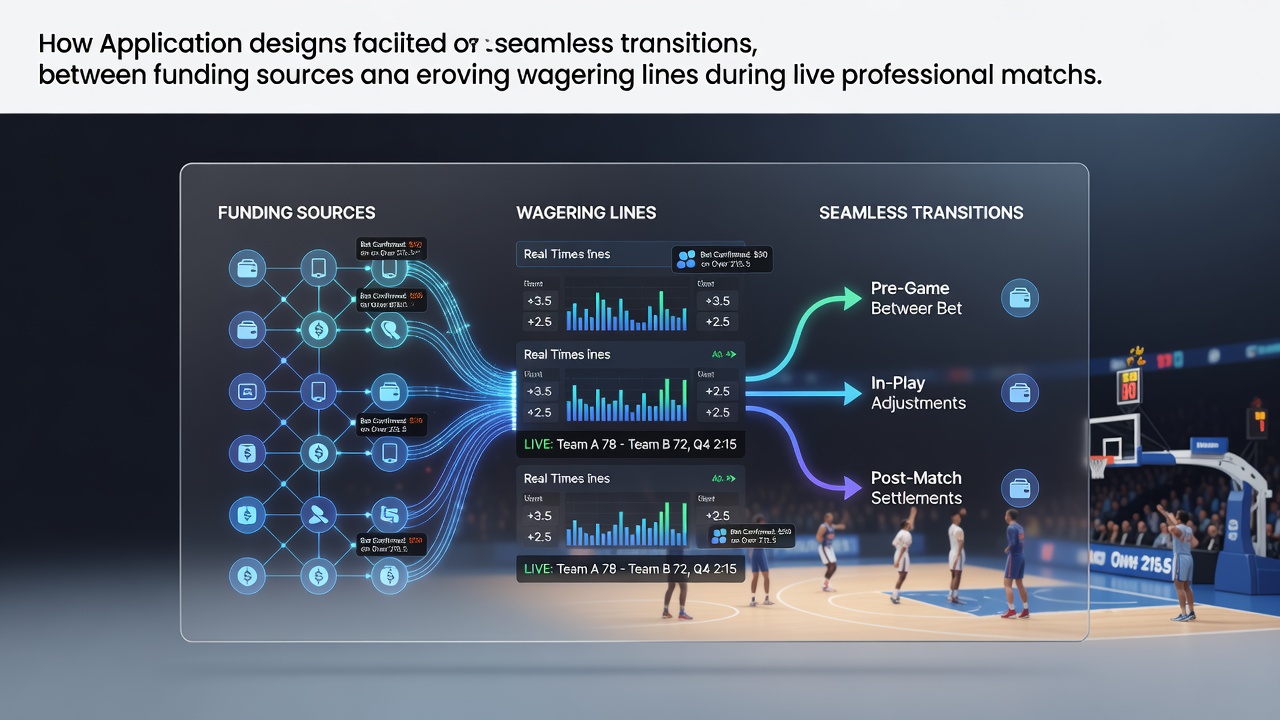
How Application Designs Facilitate Seamless Transitions Between Funding Sources And Evolving Wagering Lines During Live Professional Matches
Application architectures in mobile betting platforms handle dynamic shifts in wagering lines by integrating live data feeds with user account management systems, which allows bettors to adjust positions while switching between payment methods without interrupting the session. These designs rely on modular backend services that process incoming probability updates from sports data providers and simultaneously query available funding channels such as bank transfers, digital wallets, and electronic payment processors.
Engineers structure front-end interfaces with layered components where odds displays update through websocket connections while funding panels remain accessible via persistent navigation elements. This separation ensures that changes to point spreads or moneyline values appear instantly on screen, and users retain the ability to select alternative deposit sources at any moment during the match.
Core Mechanisms for Real-Time Synchronization
Developers implement event-driven programming models that trigger simultaneous actions when new match data arrives from official league sources. One component recalculates displayed probabilities and refreshes line values, whereas another maintains an active connection to payment gateways so balance checks occur in parallel. Observers note that this dual-path architecture reduces latency between line movements and funding decisions, particularly evident in high-volume events where odds fluctuate rapidly.
According to documentation from the New Jersey Division of Gaming Enforcement, regulated operators must maintain audit logs that capture both odds revisions and funding transitions within the same transaction stream. Such requirements encourage app designers to build unified data pipelines that log every adjustment alongside corresponding deposit or withdrawal requests.
Funding Source Integration Patterns
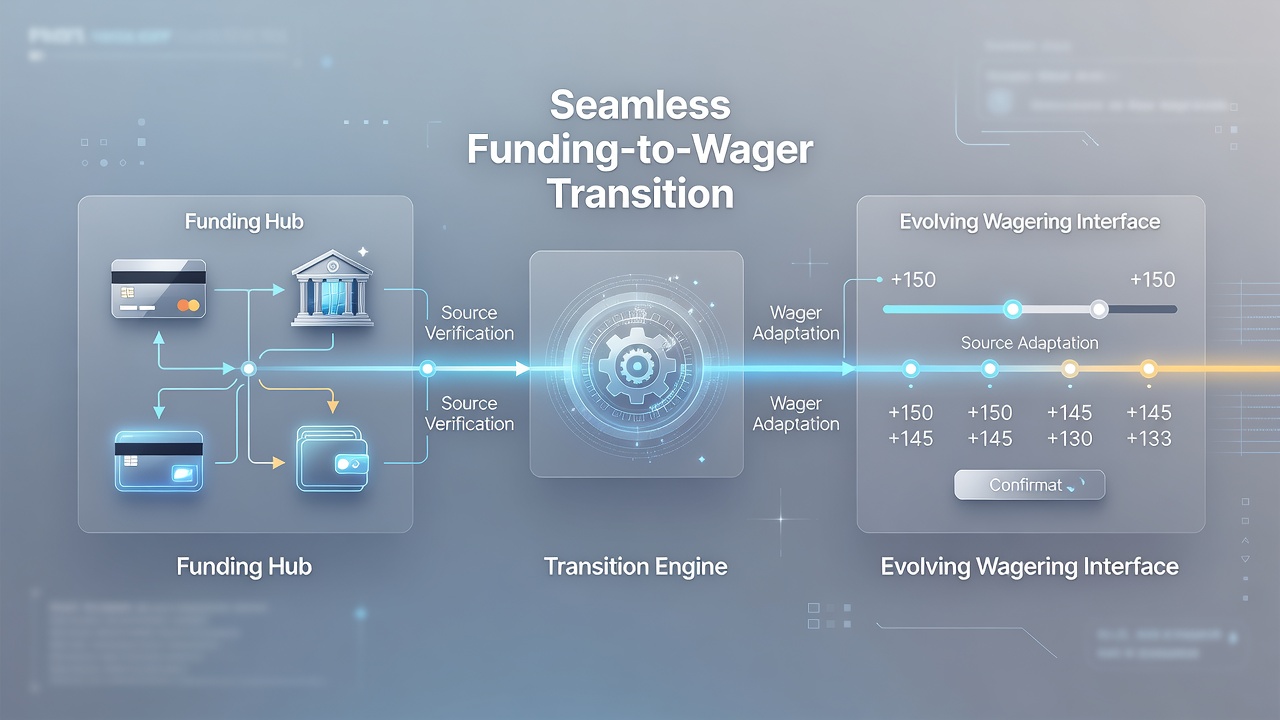
Applications employ abstracted payment layers that normalize interactions across disparate financial providers. When a line shift occurs, the system presents updated stake recommendations while automatically surfacing the user's preferred funding method and any secondary options that carry sufficient balance. This approach supports seamless handoffs between credit instruments and stored-value accounts without requiring users to navigate away from the live match view.
Data from industry reports indicate that platforms handling multiple leagues have adopted token-based authentication for funding modules, which allows quick verification even as probability models refresh every few seconds. Researchers at the University of Nevada, Las Vegas have examined these token systems and found they maintain session continuity across funding switches during extended live betting periods.
Interface Elements Supporting Continuous Play
Design teams incorporate collapsible panels and gesture-based controls that keep funding tools within reach while the primary odds board occupies most of the viewport. Users encounter minimal friction when electing to fund an account mid-match because the interface preserves context around the current wager and its associated line values. Such layouts draw from established mobile usability patterns that prioritize persistent access to account functions.
Technical specifications shared by platform operators show that background processes prefetch funding status data at regular intervals, which prepares the application to execute transitions the moment a line change prompts a stake adjustment. This prefetching strategy proves especially useful in scenarios where live matches extend into overtime periods and additional funding becomes necessary.
Regulatory and Technical Compliance Considerations
Operators align application logic with jurisdictional mandates that govern both financial transactions and wagering integrity. Systems track funding source changes against evolving lines to ensure compliance records reflect accurate timestamps and amounts. As of June 2026, several North American regulatory bodies continue to refine guidelines around real-time data handling in mobile environments, prompting further refinements in how applications sequence these operations.
Industry organizations such as the European Gaming and Betting Association publish periodic analyses of interface standards that support uninterrupted betting flows. These analyses highlight the value of modular design in meeting both technical performance targets and oversight expectations across different markets.
Conclusion
Application designs achieve coordinated handling of funding transitions and live line updates through synchronized data pathways, modular payment abstractions, and responsive interface components. Regulatory documentation and academic examinations confirm that these technical choices enable continuous engagement while preserving required audit trails and session stability throughout professional matches.